Celebrating Twenty Years Since Est. 2005
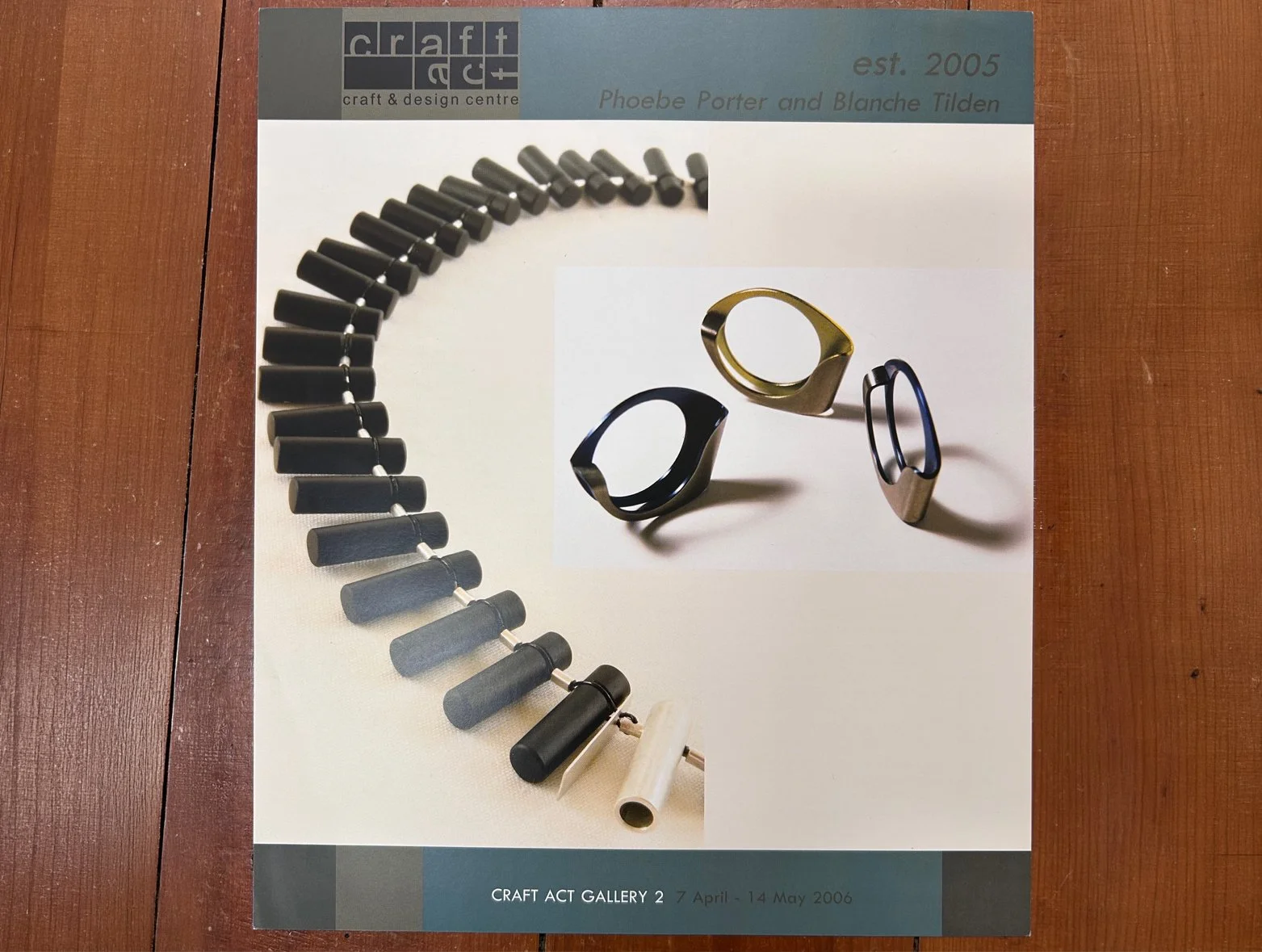
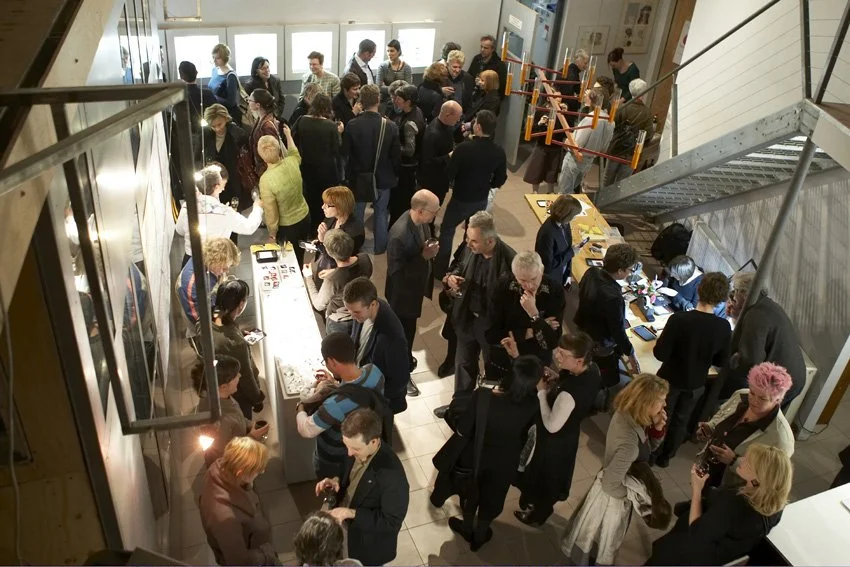
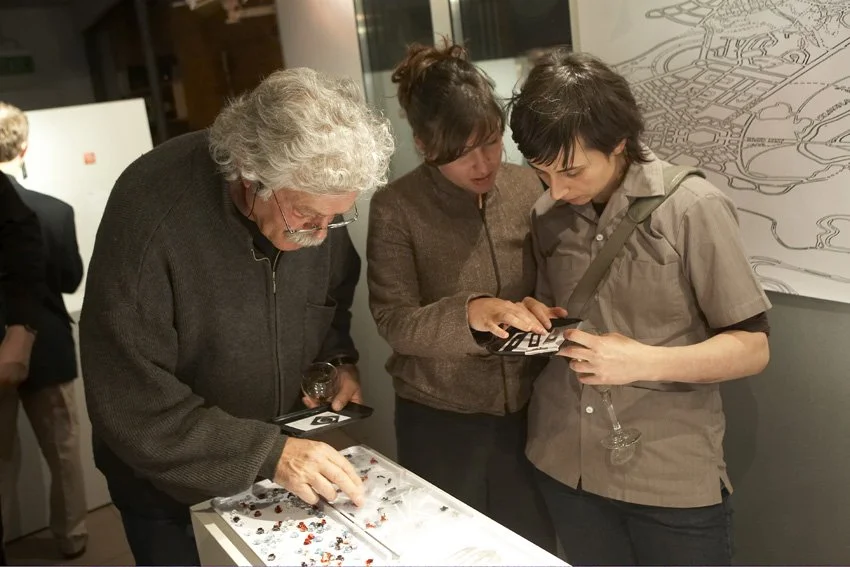
This year marks 20 years since est. 2005, the duo exhibition presented by Phoebe Porter and Blanche Tilden at Craft ACT in 2006.
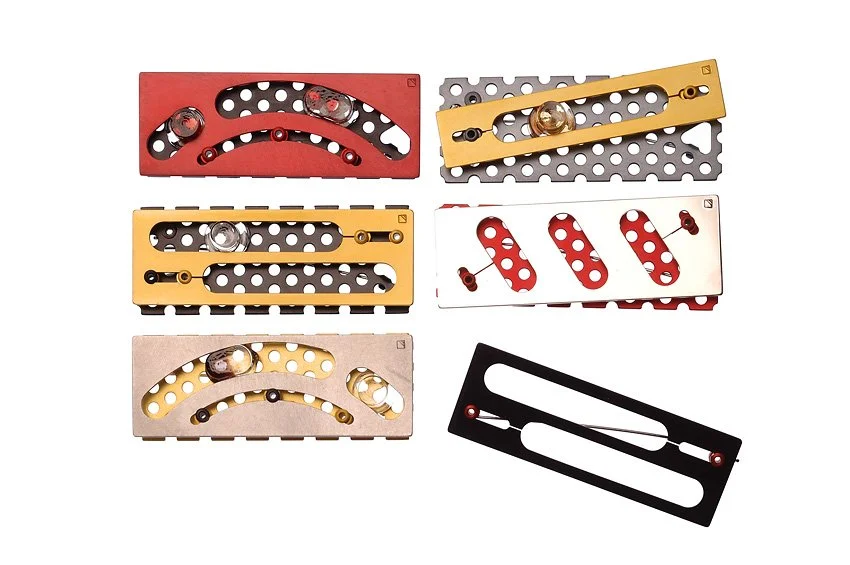
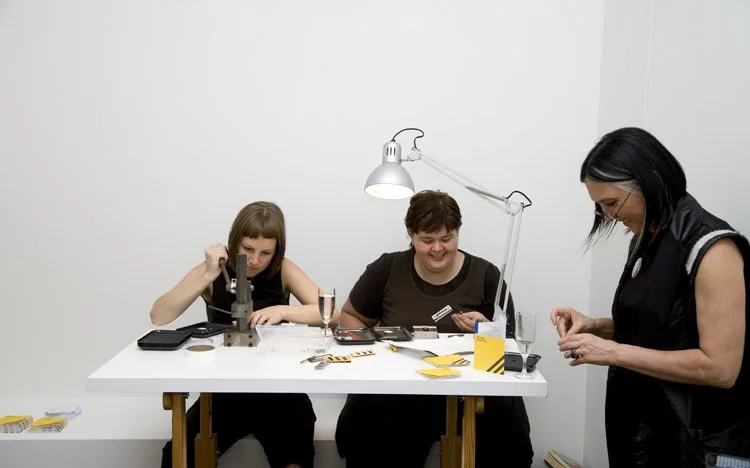
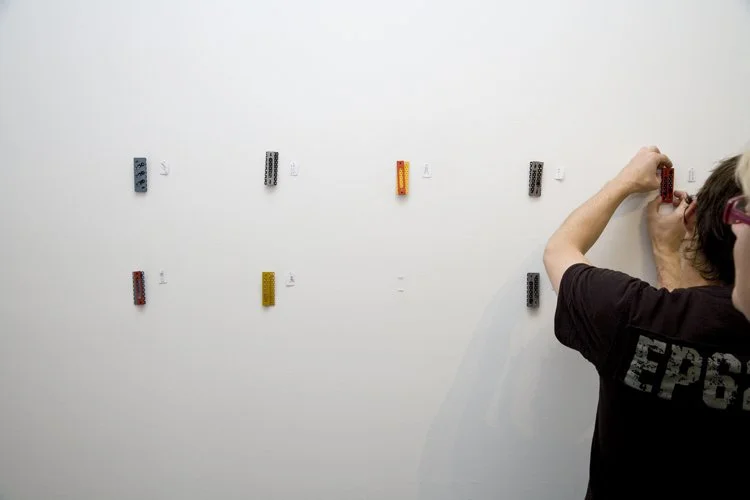
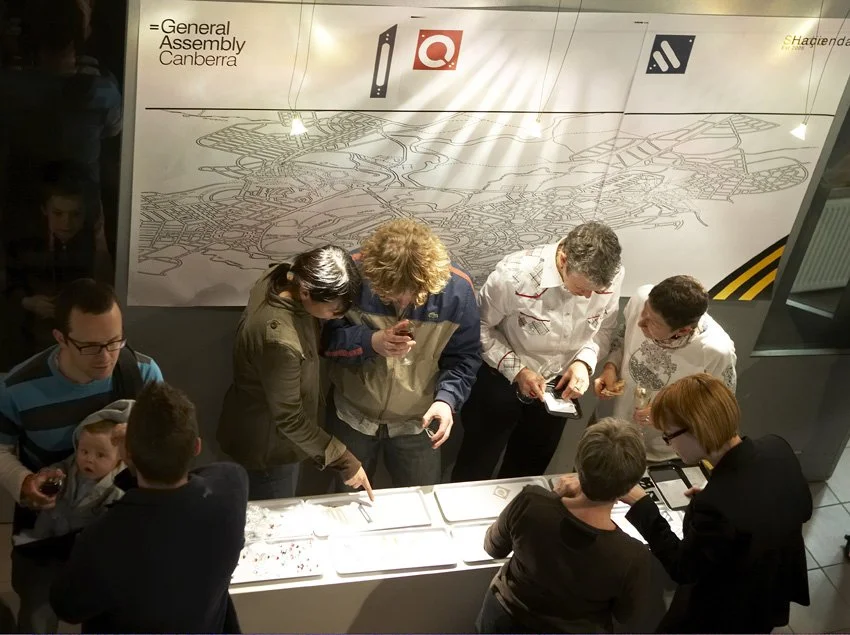
Encouraged by then director Barb McConchie and supported by Australia Council funding, the exhibition grew from a mentorship and became the springboard for a shared workshop, Studio Hacienda. After the exhibition, Porter and Tilden went on to present work in Smartworks: Design and the Handmade at the Powerhouse Museum and received a Victorian Premier’s Design Award for their collaborative project, General Assembly.
Now known as Craft + Design Canberra, the organisation has been reflecting on its history and included est. 2005 among significant past exhibitions. Looking back underscores the vital role it plays in nurturing talent, building community and connecting emerging and established makers — especially at a time when similar organisations face funding cuts and discontinuation.
Here is an excerpt from Jas Hugonnet, essay writer about the partnership:
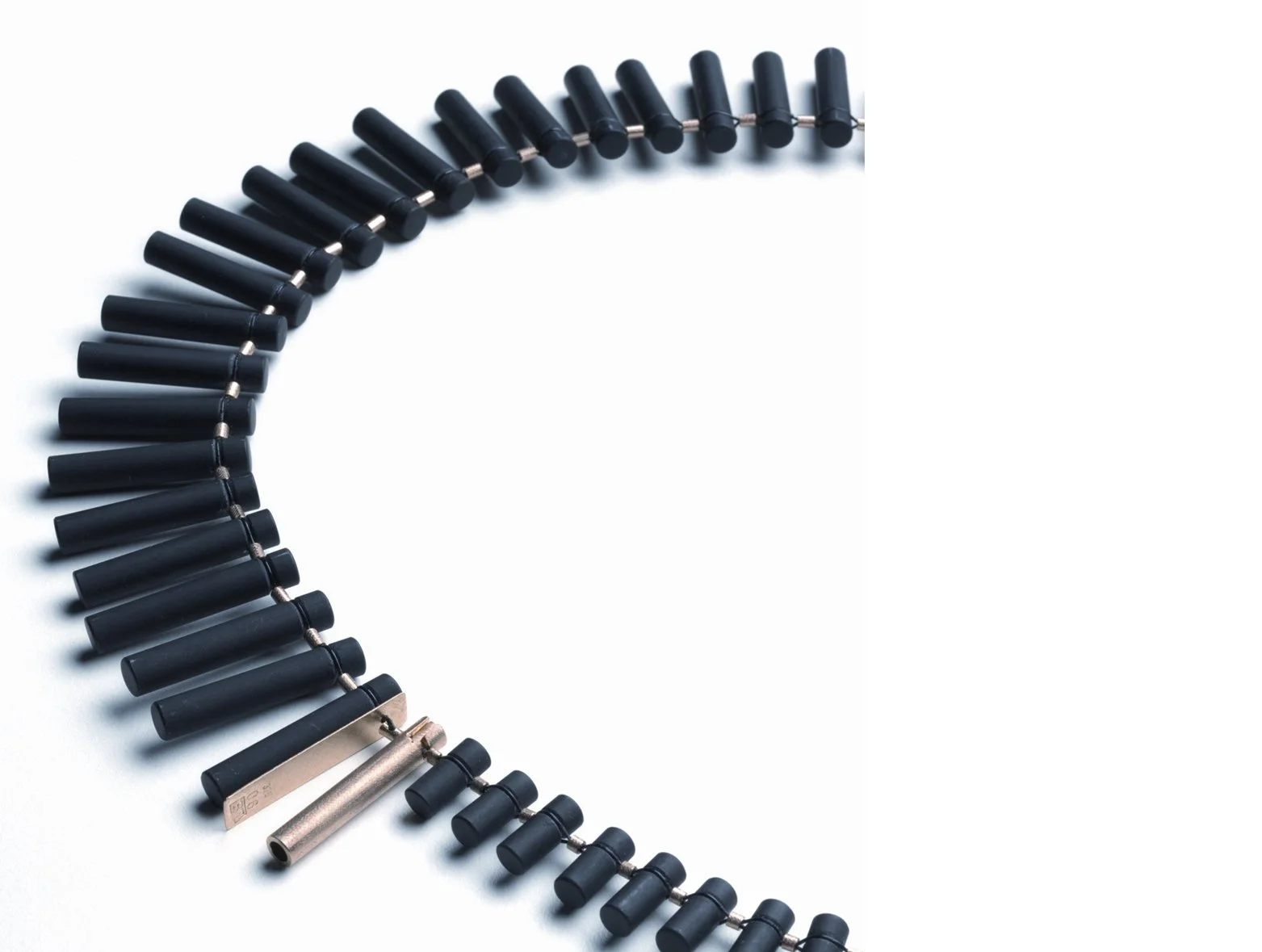
“In August 2005 Phoebe Porter, an emerging jeweller from Canberra, traveled to Melbourne to undertake a three month mentorship with jeweller, Blanche Tilden in her Fitzroy studio. During this time Porter worked closely with Tilden to develop and produce a number of pieces for Tilden's Carte Blanche exhibition. This proved to be a rare opportunity to see another maker's process from an initial concept to planning and executing the design. In addition Porter also worked with Tilden to produce large runs of her production work to send out to retail outlets. Experiencing both sides of Tilden's practice, gave Porter new making skills and the ability to develop the business and marketing skills that are essential to creating a sustainable career as a maker.
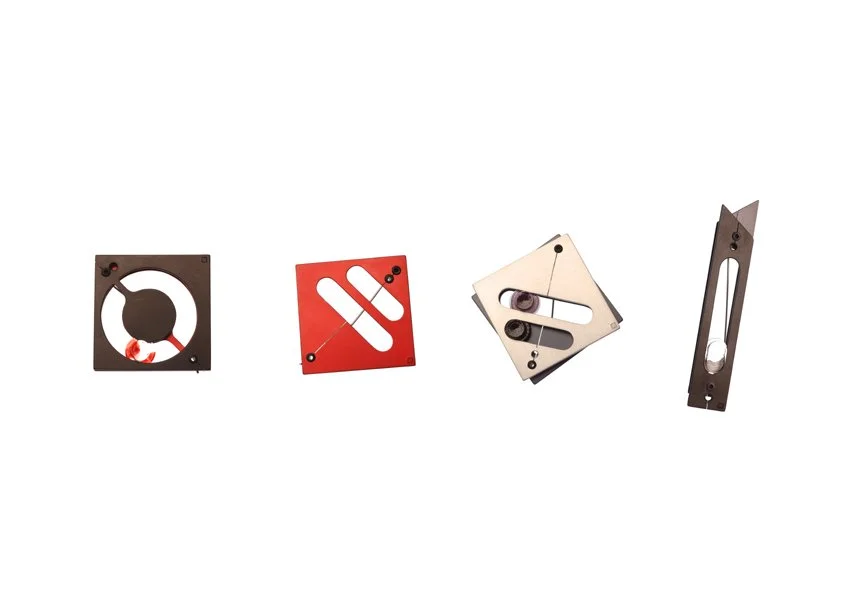
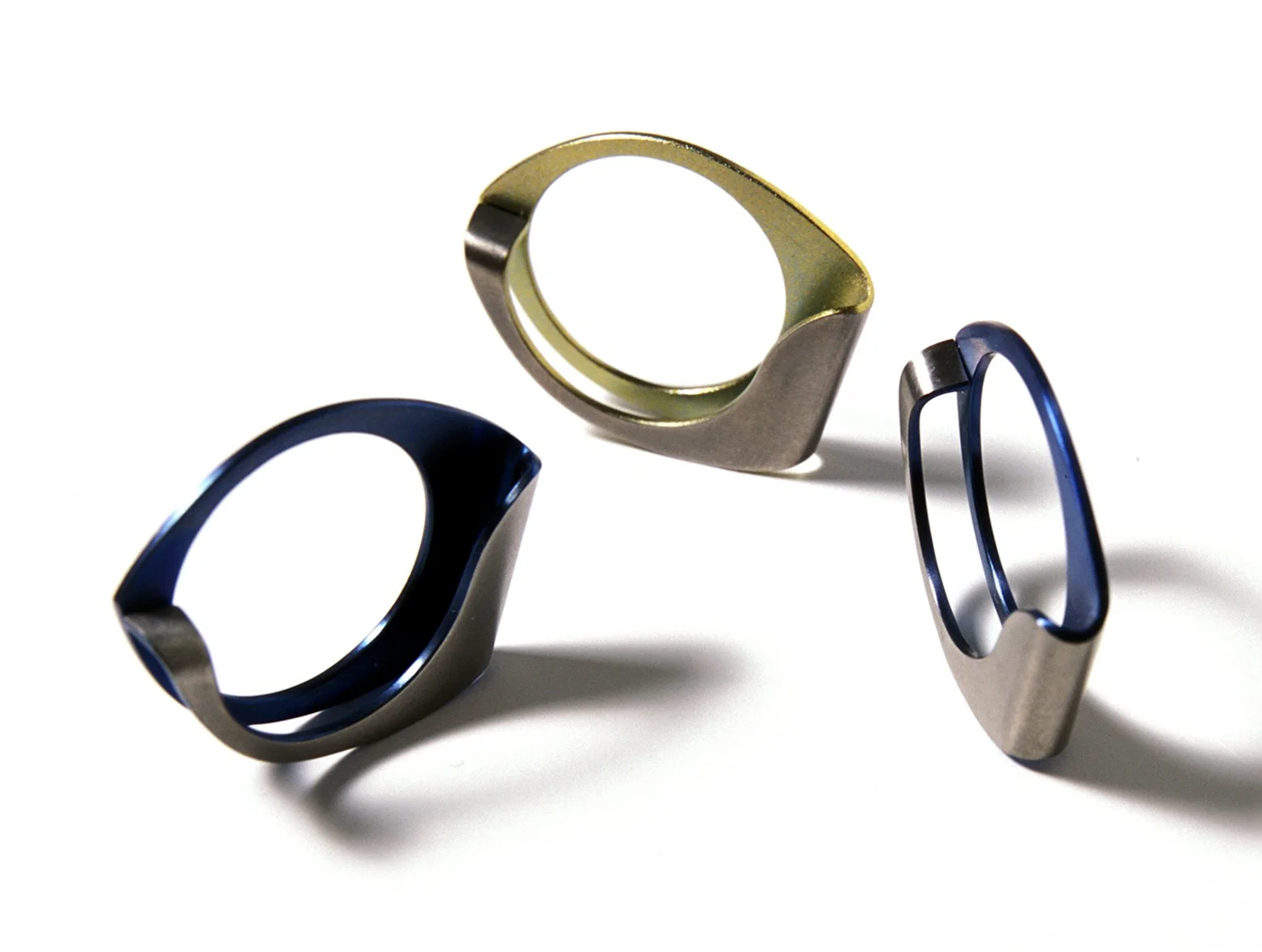
During the mentorship, Porter also developed her own designs around the theme of Folded. In the process of folding, part thereof is bent over or doubled up so that one part lies on another. In folding a sheet of metal or alloy, Porter aimed to create a volume, with a contrast between internal and external space and in doing so create works where two planes appear separated by some unseen force. Through a series of models each design was developed and refined to its necessary elements. The process of working with the mentor on their work as well as the trainee developing their own new work is a feature of the mentorship.
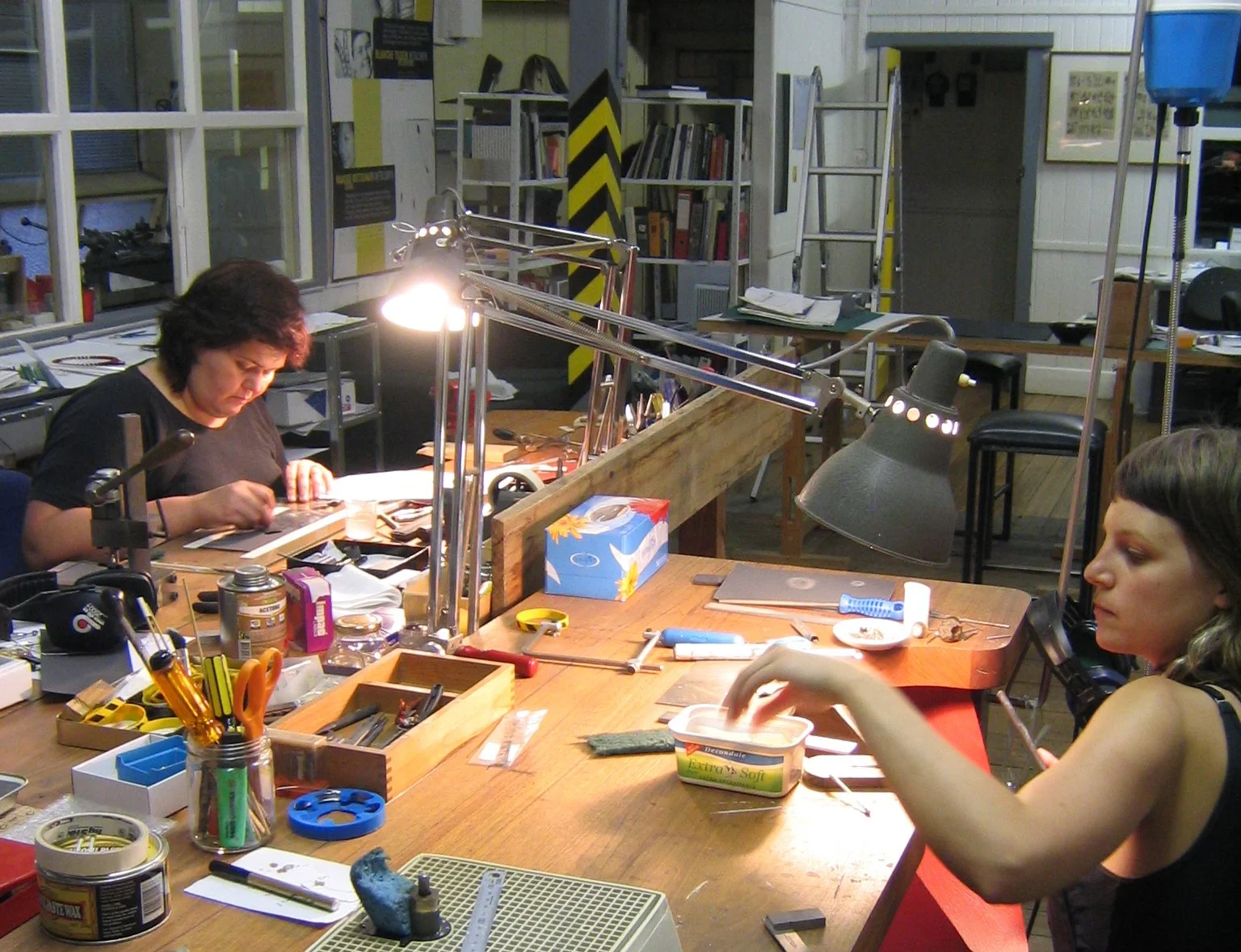
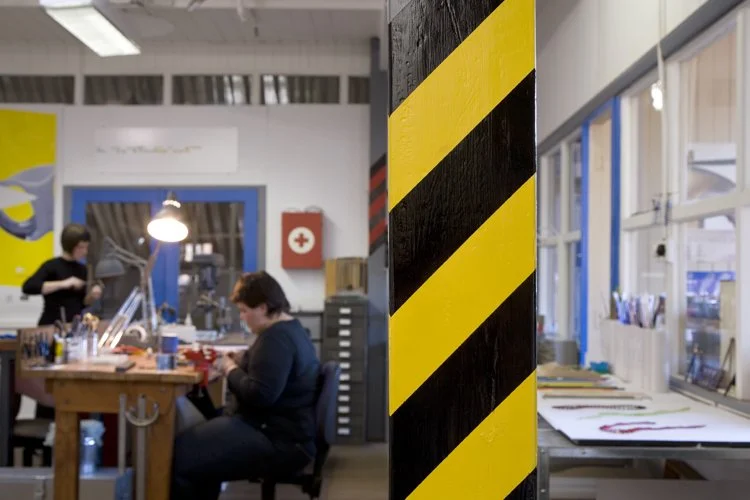
The rapport that developed between Tilden and Porter during the mentorship led them to look for a studio space that they could share, a point that suggests the project was a success! For Tilden the shared commitment to establishing a practice, finding a space and setting up a workshop has given her what she has missed working by herself. As Tilden states: the exchange of ideas, mutual support and practical problem solving that happens when you share a studio has made working so much more enjoyable. I've made a great friend, and found someone who laughs at my jokes!
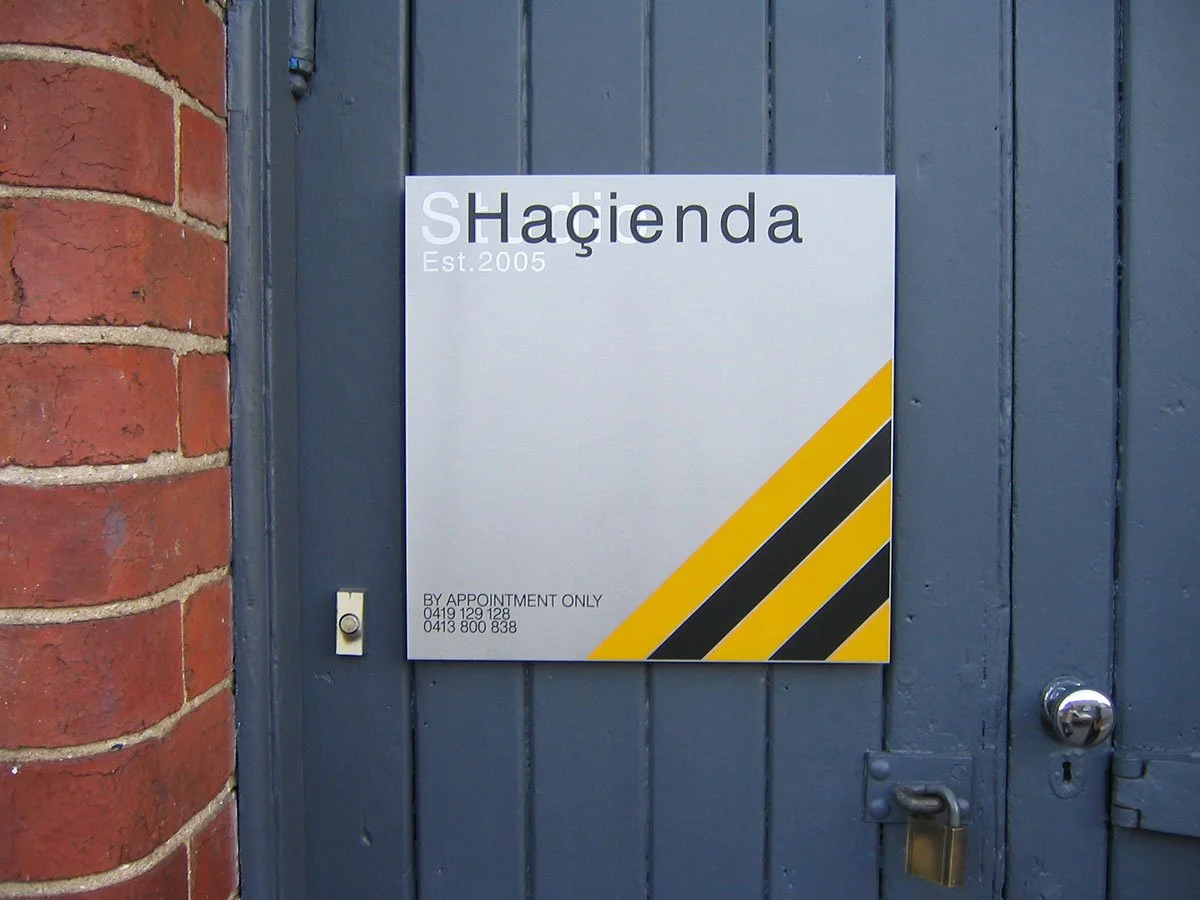
The building destined to become their studio was built in the 1920's as a boot factory, with its network of exposed pipes from the days when it was steam powered. While half the space is still operating as a boot factory, with original machinery and a bell for morning tea and lunch, the other now houses Studio Hacienda. Located in Abbotsford, Melbourne, the front part of the boot factory had been operating as Hacienda Mexican Imports and its painted facade still bears the name hacienda. Inspired by the design philosophy of the famous Manchester nightclub and Factory Records they decided to keep the name.
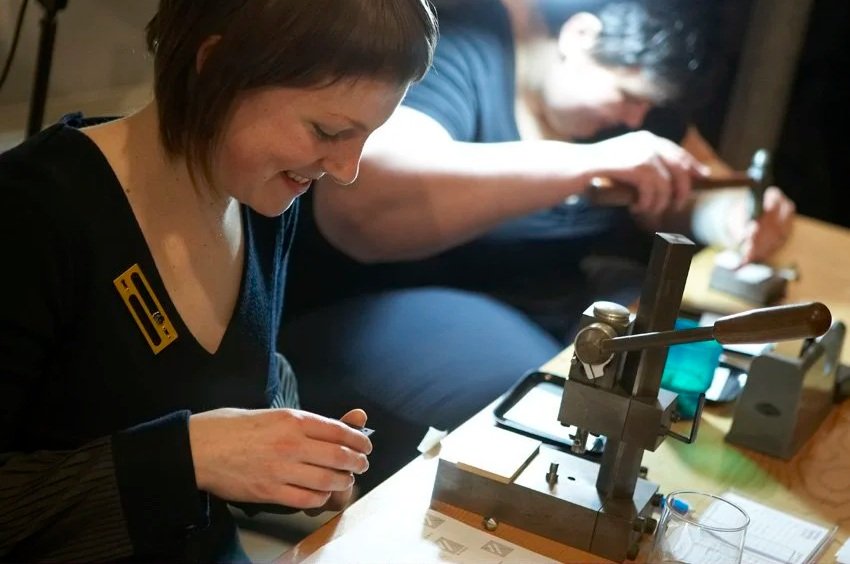
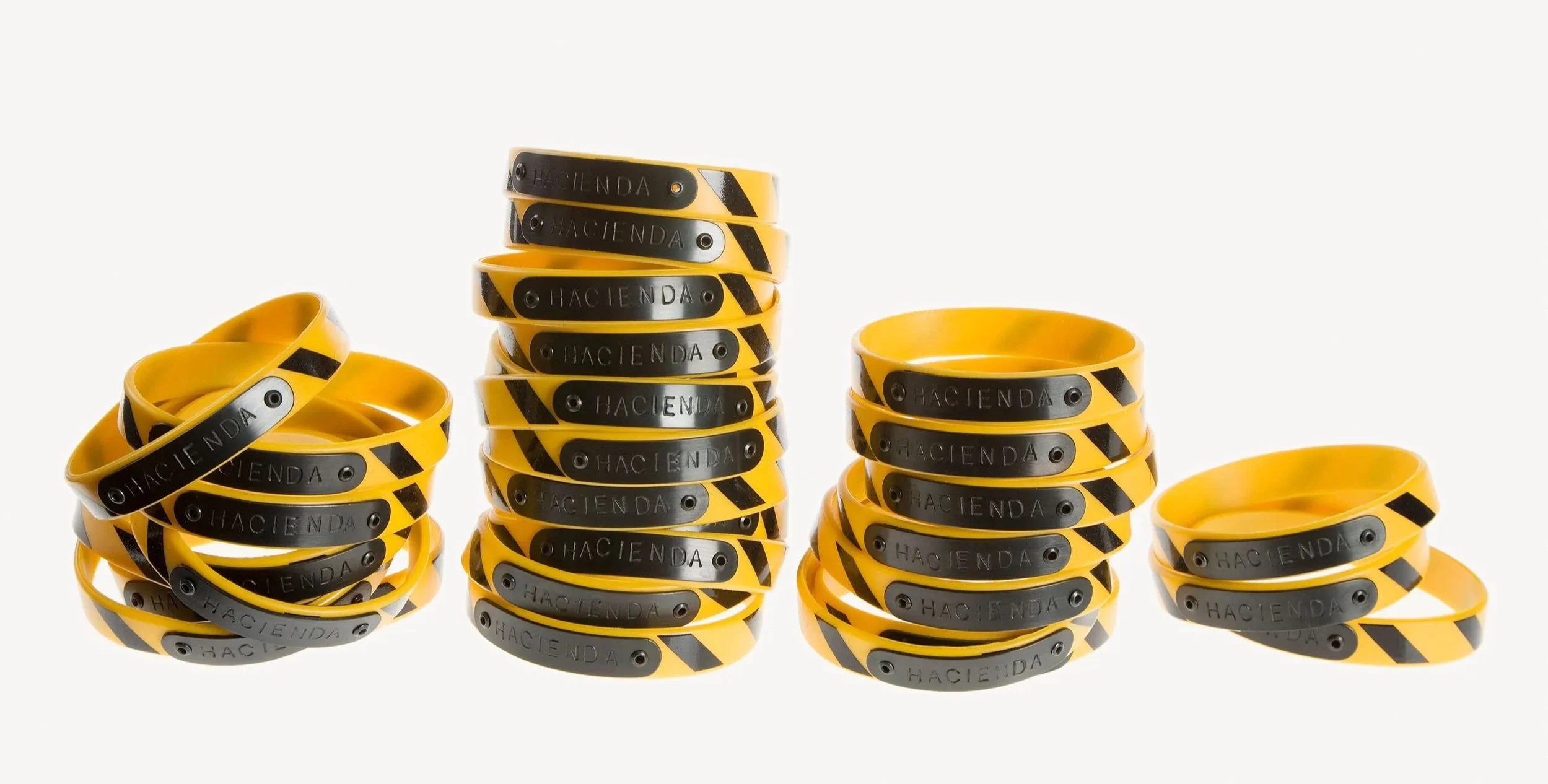
The launch of Studio Hacienda in December 2005 was an excellent opportunity to make industry contacts and invite friends and clients to the new space. After finding a black and yellow silicon rubber armband that perfectly fitted the Hacienda aesthetic, Tilden and Porter transformed it into a souvenir bracelet with a stamped aluminium tag for the launch and mailed it out to all who were invited.
Over the six months since undertaking the mentorship both now share skills that complement each other. Tilden's experience in making streamlined runs of different stock items has broadened Porter's understanding of serial production, while Porter's experience in using the computer as a design tool has enhanced Tilden's self described old school model making. Tilden also claims that Porter's experience using wire cutting and her industry contacts have saved her hours of hand making components.
According to Porter, the most important thing that Tilden shared with her was a way of looking at the world, noticing everything, thinking deeply about it and then magically translating those ideas into crafted objects. In conversation she recounts Tilden's philosophy as this: You have to feed lots and lots of information into the pot and then you have to let it cook for a really long time. That is the only way to reduce a concept into something really concentrated.”
Jas Hugonnet, February 2006